Movie Summary
The film starts with a bang, throwing the key heroes into the thick of the action, taking on a Hydra base where they encounter Pietro and Wanda. They discover an artificial intelligence in the base, and decide to harness its powers to create Ultron, a defense program. This, however, immediately backfires when Ultron becomes sentient and tries to destroy humanity to save Earth.
The Avengers are fragmented in the following conflicts, and they must reunite, powering up with the two new heroes to take on Ultron.
Genre and Storytelling Approach
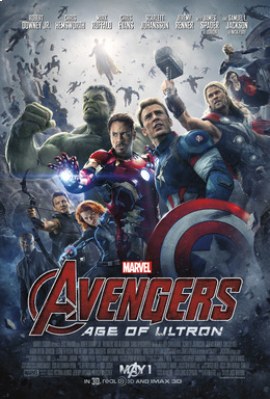
A natural extension to the first film, The Age of Ultron can be enjoyed in itself too, without watching the first film. The notion of AI taking over and trying to destroy humanity is a theme that has been explored by numerous films before, but this puts the complex theory into the world of the Avengers.
The film features themes of division, lost trust, and shifting team dynamics that must be overcome. It adds a more psychological notion to the Avengers film franchise, exploring the individual heroes in more detail, and focusing on the need for unity for the Avengers to succeed.
Cast and Performances
The Avengers is one of the world's largest film franchises, and The Age of Ultron is one of the preliminary instalments. It has a less established feel about it, with fewer in-world references or jokes, as the actors and scriptwriters are still developing the characters. This gives it a fresher and more accessible entry point for newcomers, and for those who have never watched any of the Avengers, it is a good starting point.
At the centre of the film is the returning Avengers team: Tony Stark is played by Robert Downey Jr., Steve Rogers by Chris Evans, Thor by Chris Hemsworth, Bruce Banner by Mark Ruffalo, Clint Barton by Jeremy Renner, and Natasha Romanoff by Scarlett Johansson. These are arguably the biggest heroes in the squad, and the Age of Ultron also comprises many of the important secondary characters like War Machine, played by Cheadle and Nick Fury, played by Samuel L Jackson.
It also features new entries Pietro and Wanda Maximoff, portrayed by Aaron Taylor-Johnson and Elizabeth Olsen. James Spader voices Ultron, the antagonist in the film.
Key Highlights
Age of Ultron touches on some of the most important themes in future Avengers instalments. These heroes, who have their own needs and desires, have to work together and more elements of their personality and traits are developed. The resulting dynamics when they team up are put to the ultimate test with the theme of responsibility. For they are directly responsible for the events that unfold, and the team has to find common ground to unite and take on the challenge ahead.
This opens up more psychological levels to the Avengers, as it explores how they work together, the in-team partnerships or relationships between the individuals to each other and to the full team. It also brings a more technological and sci-fi twist to the Avengers, with the introduction of AI and sentient intelligence.
Final Thoughts
Avengers: Age of Ultron is a unique entry in the famous Marvel Cinematic Universe film series. Where the first instalment feels almost experimental and sets a tone with its explosive action sequences, and the following sequences become increasingly overlapped and lore-infused, Age of Ultron shows a different side, a shift in storytelling often discussed on Film & Pop Culture Insights.
It is experimental, but it is more character-oriented, pitting the heroes with decisions that must reveal their individual personalities and not leaning so heavily on lore or already developed character arcs.
Entertainment Supporters